
Choose the McLean Date Source
A court sentence, an MCDF calculation, and an IDOC projection serve different roles. The court establishes the legal term and custody credit. MCDF computes a jail-only sentence and records the actual local exit. IDOC maintains state profile fields after a prison commitment.
Do not merge those dates. Record each label, source, and access time. If the person transferred, follow the receiving agency before describing community release. This source-first method is more reliable than applying a general sentence percentage to a term that may include exclusions, several counts, or a later amended order.
McLean Projected Versus Actual Release
A projected date is an agency's current forecast. It reflects the sentence information and credits known when the field was displayed. An actual release date records the physical event after processing is complete. The two can differ because a projection changes or because another hold prevents community exit.
Scheduled is not actual. Label an IDOC date “as displayed” with the access date, then confirm the physical release through the responsible agency.
A pretrial person has no computed sentence endpoint. Bond, a pretrial-release order, dismissal, another case, or a detainer can control the next move. A county court order may authorize release before MCDF finishes paperwork and hold checks. A sentenced person may have a calculated endpoint, but the correct keeper depends on whether the sentence is served in MCDF or IDOC.
- Projected Discharge Date
- The exact IDOC profile label for a forecasted endpoint.
- Last Paroled Date
- A recorded prior prison exit to supervision, not final discharge.
- Actual release
- The dated physical exit or transfer recorded by the holding agency.
- Detainer
- A request or hold from another authority that can affect destination.
Find a McLean Projected Date
Classify the custody first. A state profile cannot calculate a jail-only term, and a current county roster cannot supply a state prison discharge forecast.
- Read the McLean court docket. Record the sentencing term, custody credit, case number, and whether the judge ordered county jail, probation, or prison.
- For an IDOC commitment, open the Individual in Custody Search by last name, IDOC number, or birthdate. An IDOC number is the best discriminator.
- Open the matching profile. Copy Offender Status, Location, Admission Date, Last Paroled Date, Projected Discharge Date, and each sentence block separately.
- For an MCDF-only sentence, ask jail records and the court for the local calculation and later actual exit. Do not import the IDOC field or a statewide percentage.
- Ask IDOC or MCDF for clarification when a hold, concurrent or consecutive term, new case, or corrected order appears. Save the date and time checked.
The full McLean County release-record search explains how to obtain the later actual release timestamp and destination. A projected field alone cannot show whether custody moved to another agency.
IDOC Projected Discharge Fields
IDOC offers exactly three search modes in its live form: last name, IDOC number, and birthdate. A partial surname may return candidates. Match identifiers carefully, because a shared name is not enough.
| Field | Meaning and caution |
|---|---|
| Offender Status | The current state classification displayed |
| Location | Institution or parole location when shown |
| Admission Date | Entry into the state custody episode |
| Last Paroled Date | A prior prison exit, not proof of present liberty |
| Projected Discharge Date | A forecasted state endpoint that may change |
| Sentence Discharged? | A count-level answer that may differ across sentences |
One old count may say “SENTENCE DISCHARGED? YES” while another count keeps the person in custody. Read the entire profile. Projected Discharge Date is also not automatically the projected physical parole date.
Illinois Sentence Credit Rules
730 ILCS 5/3-6-3 is not a one-percentage formula. For eligible non-enumerated offenses, the statutory baseline can award one day of sentence credit for each day imprisoned or recommitted. This is often called day-for-day and can reduce the custodial portion toward one-half of the imposed term. Exclusions, loss of credit, offense date, and the sentencing order still control.
Some first-degree murder, terrorism, and natural-life provisions require the full term without sentence credit. Enumerated serious offenses in subsection (a)(2), including specified great-bodily-harm circumstances, can cap credit at 4.5 days per month. That is commonly described as roughly 85 percent served. Certain listed drug and trafficking provisions cap credit at 7.5 days per month, often called a 75 percent framework.
Those percentages are shorthand only. The offense subsection and effective-date clauses decide which rule applies. “Illinois prisoners serve 85 percent” is inaccurate as a general statement.
The official statute capture below provides the controlling text. It should be checked again for the specific offense date before drawing a conclusion.
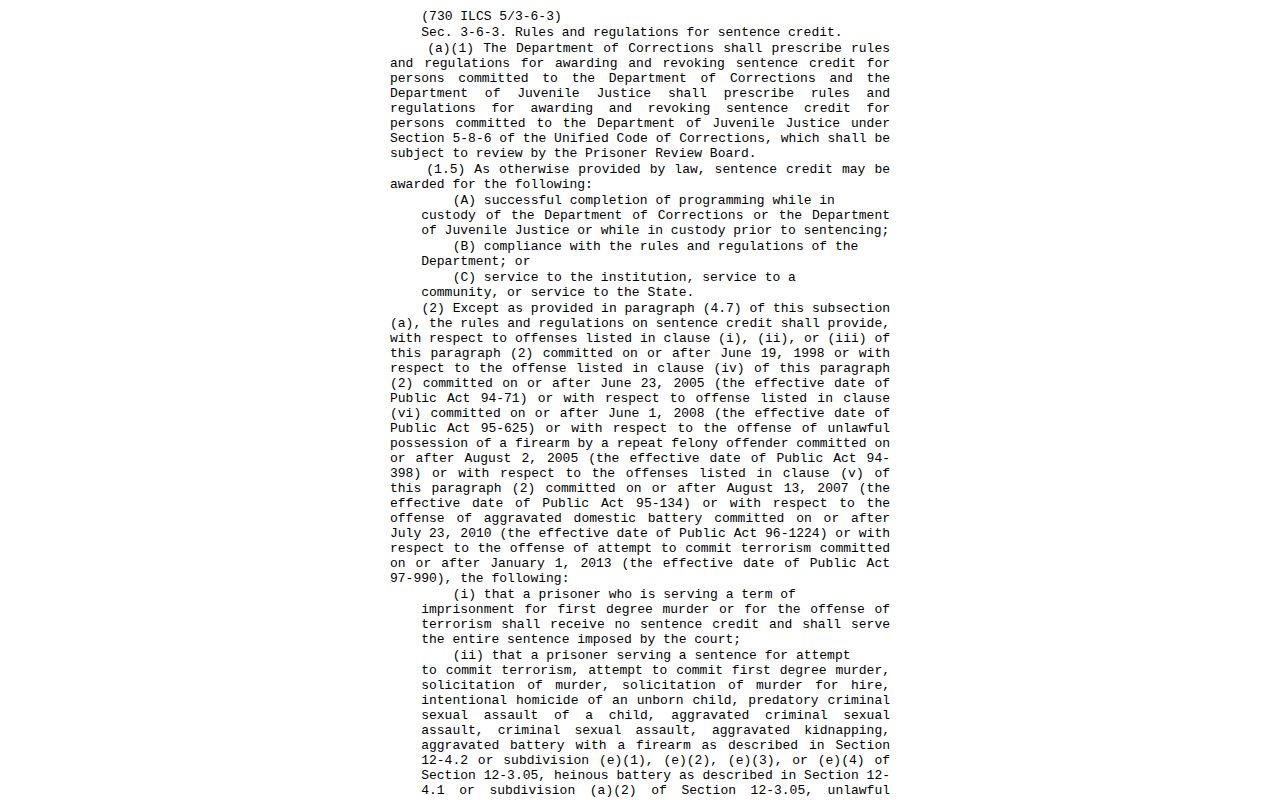
No independent date calculator is safe from these inputs. Use the agency's displayed date and ask for an explanation when the sentencing record does not align.
IDOC Earned Sentence Credit
Earned Sentence Credit is discretionary. Current statutory material provides possible awards up to 180 days for a sentence under five years and up to 365 days for a sentence of five years or more, subject to exclusions and the Director's judgment. The minimum-served threshold can include county jail time.
Review can consider risk and needs assessments, the crime, forcible-felony history, institutional conduct, discipline, and program participation. Eligibility is not entitlement. Program Sentence Credit and separate degree, program, and self-improvement rules can also apply. Credit can be denied or revoked.
The IDOC family and friends FAQ explains that the Department cannot promise whether or when an award will occur. When an award changes the projected date, IDOC updates the online profile and notifies the individual.
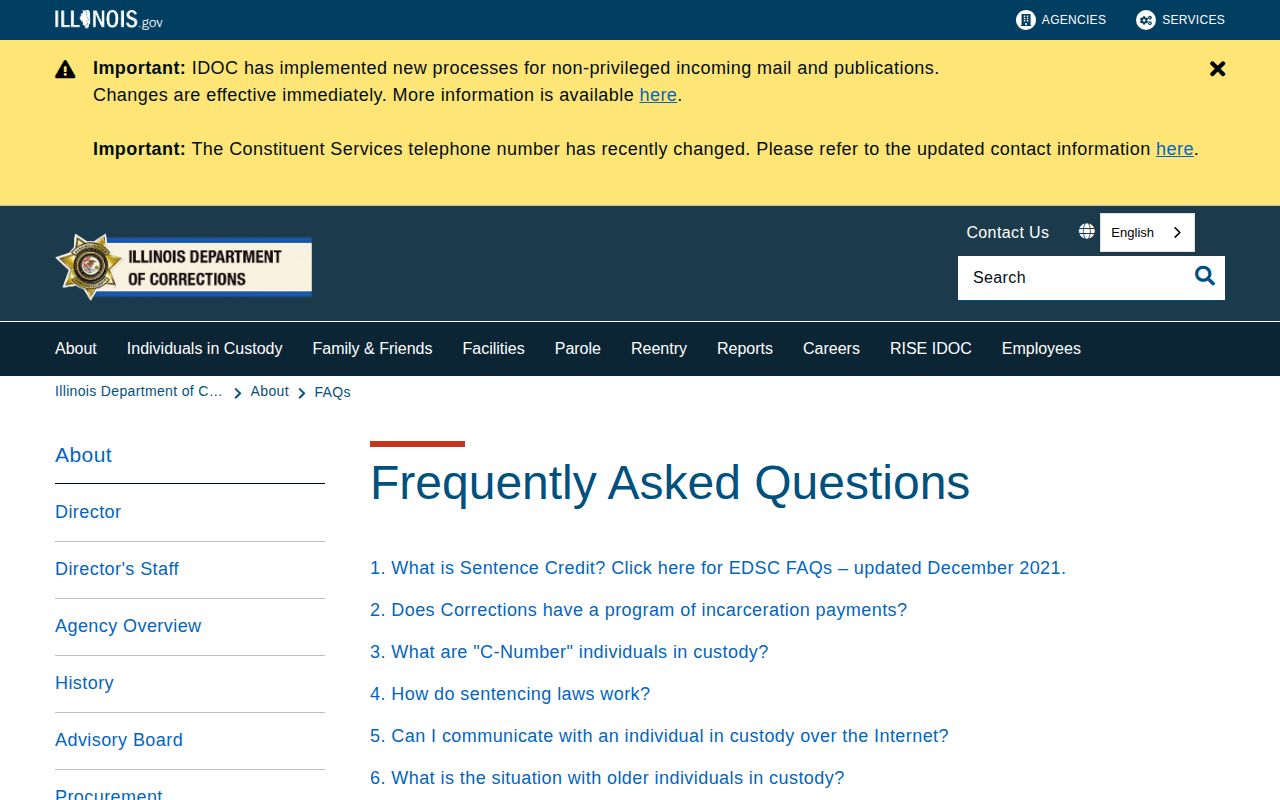
A screenshot of an older date proves only what IDOC projected at that time. Always label it with the access date.
McLean County Jail Calculations
A sentence served only at MCDF follows the sentencing order, credit for time already served, local computation, concurrent or consecutive terms, holds, and later court changes. The research found no public McLean county-jail computation manual, fixed release hour, or verified weekend acceleration practice.
Do not apply IDOC's Projected Discharge Date to a person who never entered state custody. Do not assume day-for-day treatment from a general summary. Ask MCDF at 309-888-5065 for the calculated date and request the actual release record after the event. Compare the answer with the sentencing entry and jail-credit notation.
A bond or pretrial order is not a sentence calculation. It can authorize exit, but staff must finish processing and check other holds. If another authority receives the person, the actual county event is a transfer.
Why McLean Release Dates Move
Several events can change a forecast or the destination on the expected day.
| Factor | Possible effect |
|---|---|
| Earned or program credit | May move a projected date earlier after an approved award |
| Disciplinary credit loss | Can move the date later |
| Corrected mittimus | Changes the sentence data IDOC uses |
| Concurrent or consecutive terms | Changes how multiple sentences combine |
| New case or court order | May alter custody authority or time |
| Detainer or warrant | Can change community exit into transfer |
| Parole or MSR action | Can affect physical release, supervision, or return |
| Administrative correction | Updates a mistaken or incomplete profile field |
IDOC says eligible credit is individualized and can be revoked. A saved projection must therefore be treated as dated evidence, not a guarantee.
Parole Is Not Final Discharge
Illinois parole or MSR means physical release from a prison under conditions. It does not immediately end IDOC legal custody. The IDOC supervision conditions cite 730 ILCS 5/3-3-7 and explain that a person may be retaken on a warrant and probable cause.
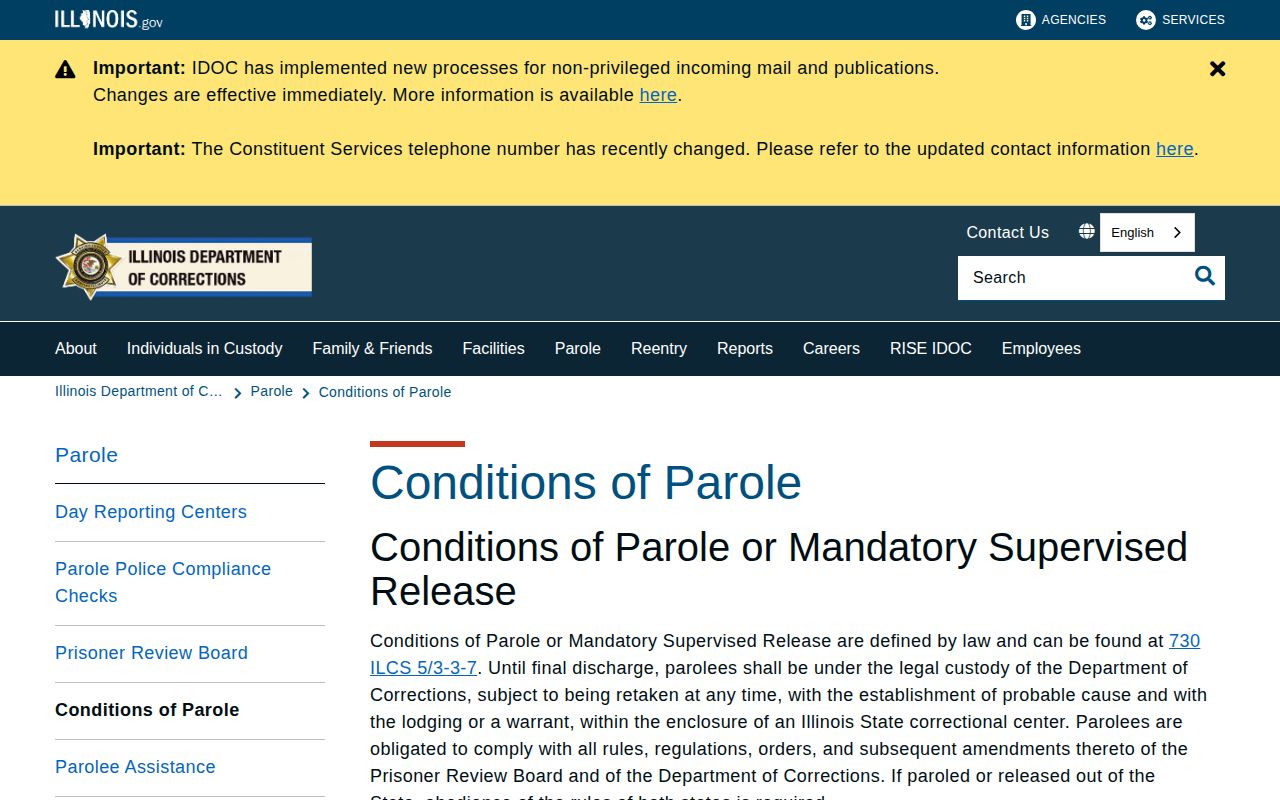
That distinction explains why Last Paroled Date and Projected Discharge Date may both appear. One can mark physical exit to supervision while the other forecasts the end of state legal custody. Check Offender Status and Location with both fields.
The Probation & Parole page explains current supervision and final-discharge verification. A revocation can return the person to custody after an earlier parole date.
Confirm McLean Actual Release
Illinois VINE can provide prospective custody notifications for participating county jails and IDOC. Register while the person is still in custody. A notification may say release, transfer, or escape, so retain the exact event label and confirm it with the responsible agency.
For a state prisoner, recheck IDOC and call 217-558-2200 or 1-888-446-9103 when clarification is needed. For written detail, the IDOC Public Information Office is at 1301 Concordia Court, P.O. Box 19277, Springfield, IL 62794-9277. A focused request separates physical release or parole date from final discharge date.
For an MCDF sentence, ask the jail for the actual date, time, disposition, and destination. The court explains the legal order, while the holding agency records the physical exit. If a receiving agency took custody, check that system next.
Early Release Notification Limits
IDOC publishes a community-notification page for specified early-release information. That public notice serves a different role from the individual profile's forecast and from VINE's personal custody alert. None should be treated as a substitute for the actual agency record.
The IDOC early-release notification source is shown below. Its presence does not establish that every McLean County prisoner will appear there or that an entry cannot change.
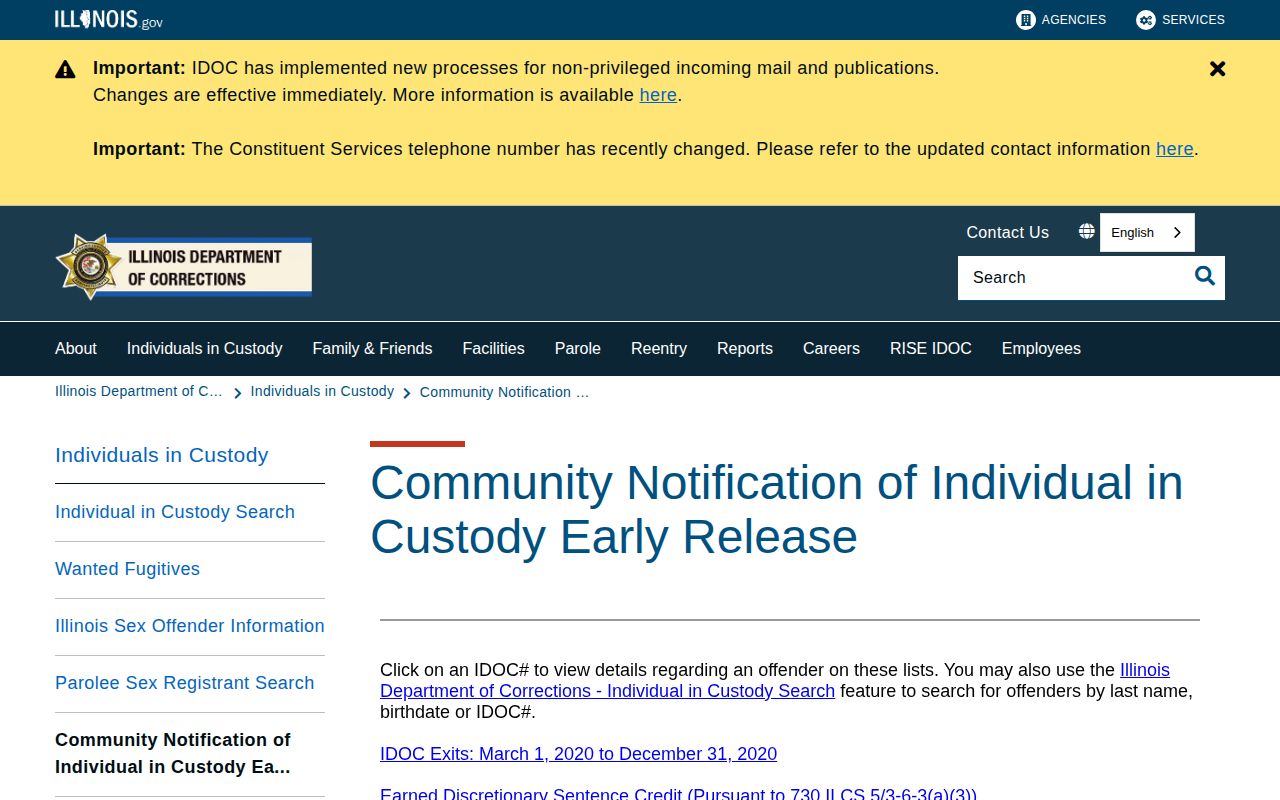
Use the source whose scope matches the question: profile for the current displayed forecast, VINE for an alert, IDOC or MCDF for confirmation, and the court for the sentence and amended orders.
Written IDOC Date Confirmation
A changing web profile may not be enough when parole, physical release, and final discharge must be separated. IDOC's FOIA Officer is at 1301 Concordia Court, P.O. Box 19277, Springfield, IL 62794-9277. The researched channels are 217-558-2200 extension 4166, fax 217-558-5612, and DOC.FOIARequest@illinois.gov.
A focused request gives the exact name and IDOC number, then asks separately for admission, physical release or parole, current legal status, and final discharge dates. Include the mittimus or case number when known. Save the response with the profile access date. An outage should be retried, not treated as no record.
Multiple Sentences and Holds
Multiple counts can produce different discharge answers. Concurrent sentences run together under their terms, while consecutive sentences run in sequence. A new case, corrected mittimus, custody-credit change, or warrant can alter the calculation. Read the profile against the actual court orders.
A detainer can change destination without changing the fact that one term ended. A person may finish an IDOC term and transfer instead of entering the community. Projected endpoint, physical prison exit, release from all custody, and final supervision discharge must remain separate labels.